
Lexus Giles
But these are clay, and she is the potter
April 12 – May 10, 2025
By Brett Levine
Containers. That might be the word bell hooks would use. Those vessels that both define and project. Those objects that both hold, and release. Those objects, like moments, that rest in our hands with heft and weight, but, through an opening, offer the possibility, if not even the invitation, to move beyond.
Lexus Giles is a creator of just such potential. Of ceramic works that both respect and revere history while using a familiar language to push understandings forward. Hers is a practice that seems familiar. Ceramic face jugs, often immersed and subsumed within folk art culture, but seldom contextualized more deeply. Rarely celebrated for their history. Rarely considered for their many meanings, roles, and purposes. Yet face jugs are inherently Black, widely regarded to have first appeared in South Carolina, and have been created by enslaved persons and their descendants.
Hooks reminds us – although true, in another context – that “containers are reminders of the way history is held and shaped.” Yes, held and shaped physically, concretely. Worked. Created. For Giles, face jugs tell stories, in her words, of “structure, erasure, and the systems affecting my community while celebrating Blackness.” Each is an oscillation between these two points, between an embodied respect for and commitment to enlivening histories combined with a responsibility to use this familiar language as a contemporary means of shared communication.
Yet there’s always that moment when history threatens to overwhelm innovation. When the familiar language of art suffers under its own lineage. And that is a challenge Giles has overcome. Her works acknowledge the face jug as a narrative tool, as a cultural communicator, as a visual language, but rather than simply adopt the language in an attempt to reproduce it, instead she reimagines the construct, literally combining the narrative language of the past with visual and narrative languages of her present day.
Giles’s works invite viewers in with a feeling of the familiar. Her shapes seem grounded in history. Her patterns, well, most people will feel satisfied enough if they even land somewhere near kente cloth. While she doesn’t specifically share her inspirations, one might argue that her patterns draw deeply from countries from the Bight of Biafra. Perhaps, even, a variation on Aso Oke, a historically Yoruban textile design.
The power in each piece stems from her ability to blend the archetypal with the contemporary. Rather than adhere to a Southern folk-art face jug tradition, Giles’s works combine a reverence for anchoring the historical, then destabilizing through the contemporary. There’s the reverential figure, but then there’s the cultural familiar. Take Church Ladies. The predominant form tends traditional, but the church ladies themselves show their Sunday finest. There are the gold grills, the suits, the hats. But the connection comes in Giles’s subtle nod to shared finery. Each has jewelry, a necklace. Each shimmers through that conversation. In a sense, the gold becomes the thread by and through which each vessel connects both its subjects and each to its other.
Take Timmy Squirrel. Here, it feels as if Giles does something truly extraordinary. Timmy, resplendent in a natural afro, connects again with his ancestor. Timmy Squirrel may well be a reference to Timmy Tiptoes, a Beatrix Potter character. Potter of course also created Peter Rabbit, and in 1910 a “turnover book” – one where you read one story, then flip the book over and start on the other – was published that combined Potter’s The Story of Peter Rabbit with… Helen Bannerman’s The Story of Little Black Sambo. So think of Giles’s work as a true study in genius, of creatively connecting a reverential history of the black face jug with the problematic histories of modern and contemporary Black representation. And while her figures may in some senses seem to be caricatures, in fact she’s simply reducing each to its most effective narrative elements. Like traditional face jugs, Giles creates archetypes of Blackness, tropes that allow her to simply say, “we are, and this is.”
At times, Giles weaves this together even more subtly. It may take you a minute to notice that the embellishment and adornment in Soul Sistahs is actually the sistahs themselves. That’s because, when seen from the front, their brilliant blonde afros are standing in as something else – the always already expectation that there has to be some sort of fur, or fleece, or something, some sort of adornment that signifies Africa. Take a step left or right, and you’ll find that this isn’t some sort of exotic fur or skin, but rather the supportive framework of subsequent generations of Black women asserting power, identify, and joy.
What Hands of Freedom asks is that we pause to situate histories within the contexts of our present days. Giles’s face jugs each map a history from an African historical antecedent and the languages of enslaved peoples to the vibrancy and vitality of a Blackness that acknowledges and nestles within these histories. Hers is a storytelling that uses the best of the physical, our earth, to both ground each of us within that undeniable past and to invite each of us to consider our infinite futures. Each story a parable that fits within the palms of our hands
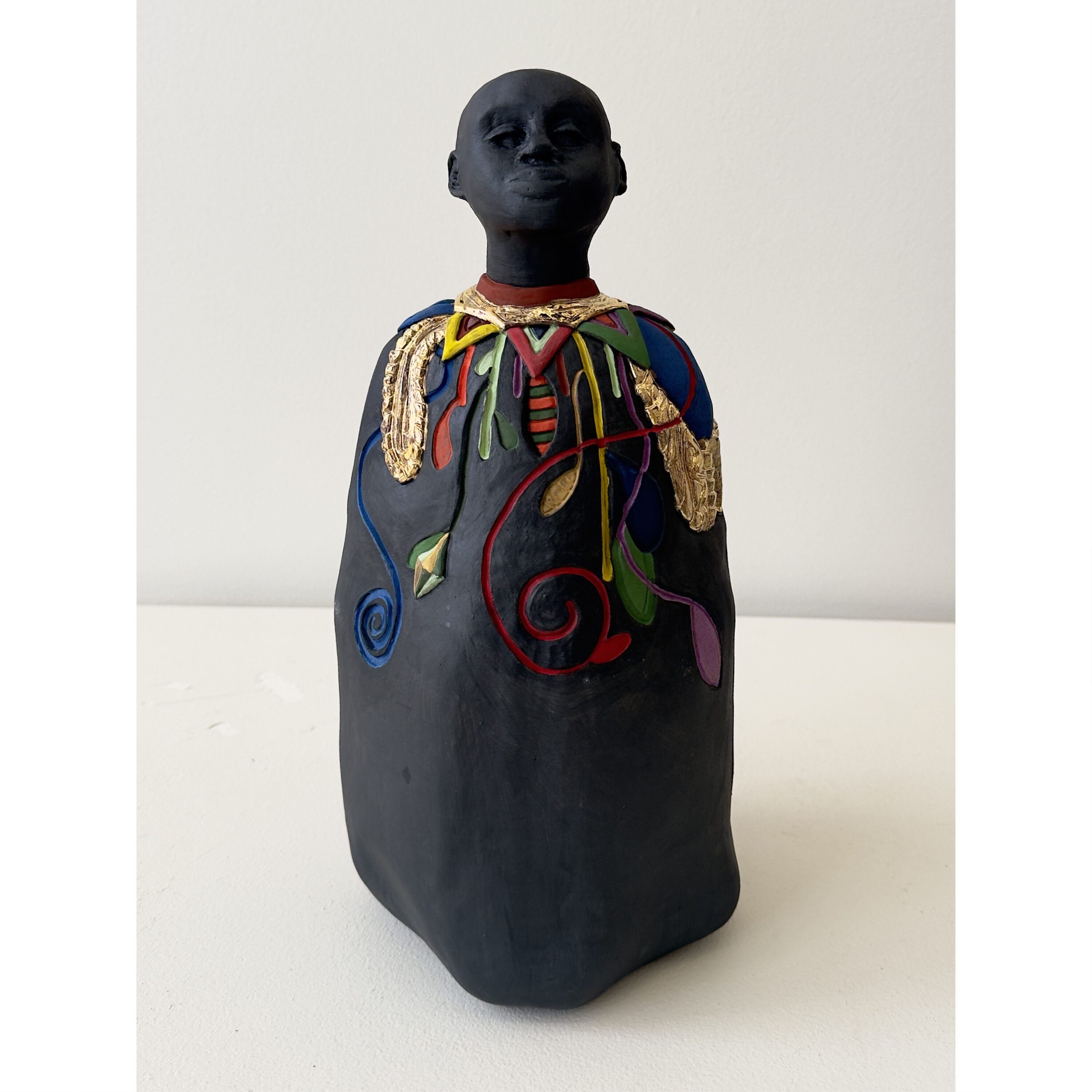
Lexus Giles
Bamboo Earrings
13 x 9 x 9 inches
Ceramics
2025
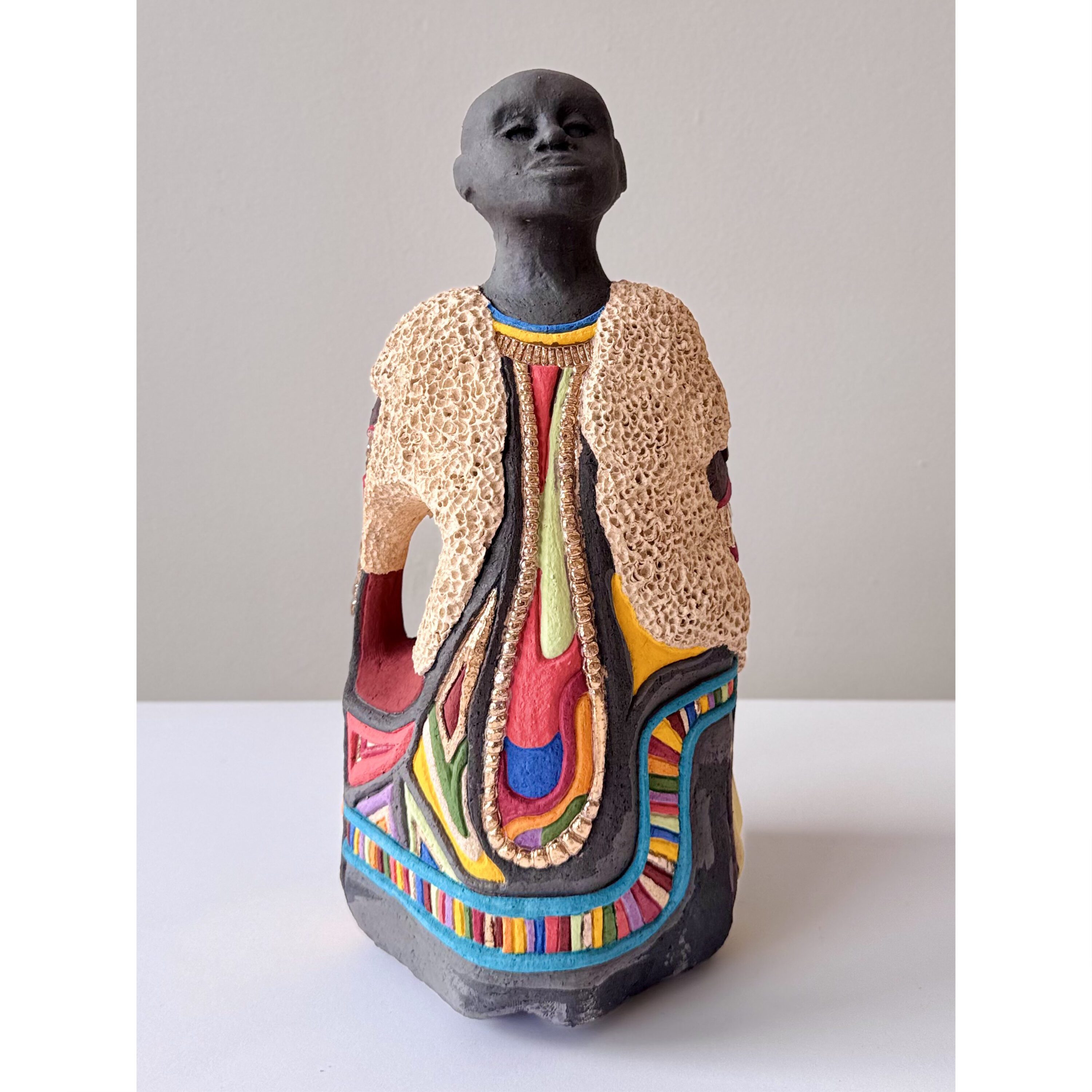
Lexus Giles
Soul Sistahs
13 x 9 x 9 inches
Ceramics
2025
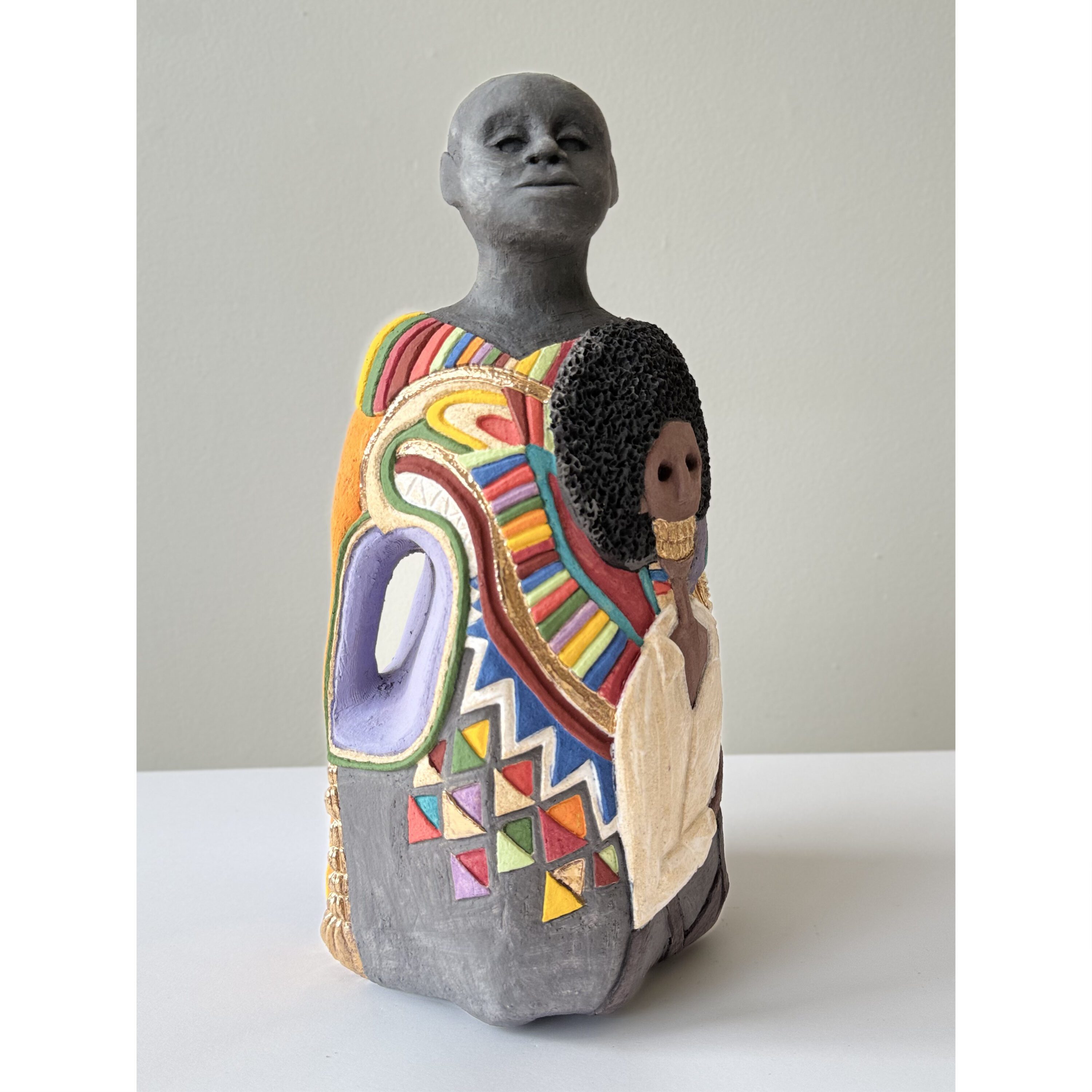
Lexus Giles
Timmy Squirrel
13 x 9 x 9 inches
Ceramics
2025
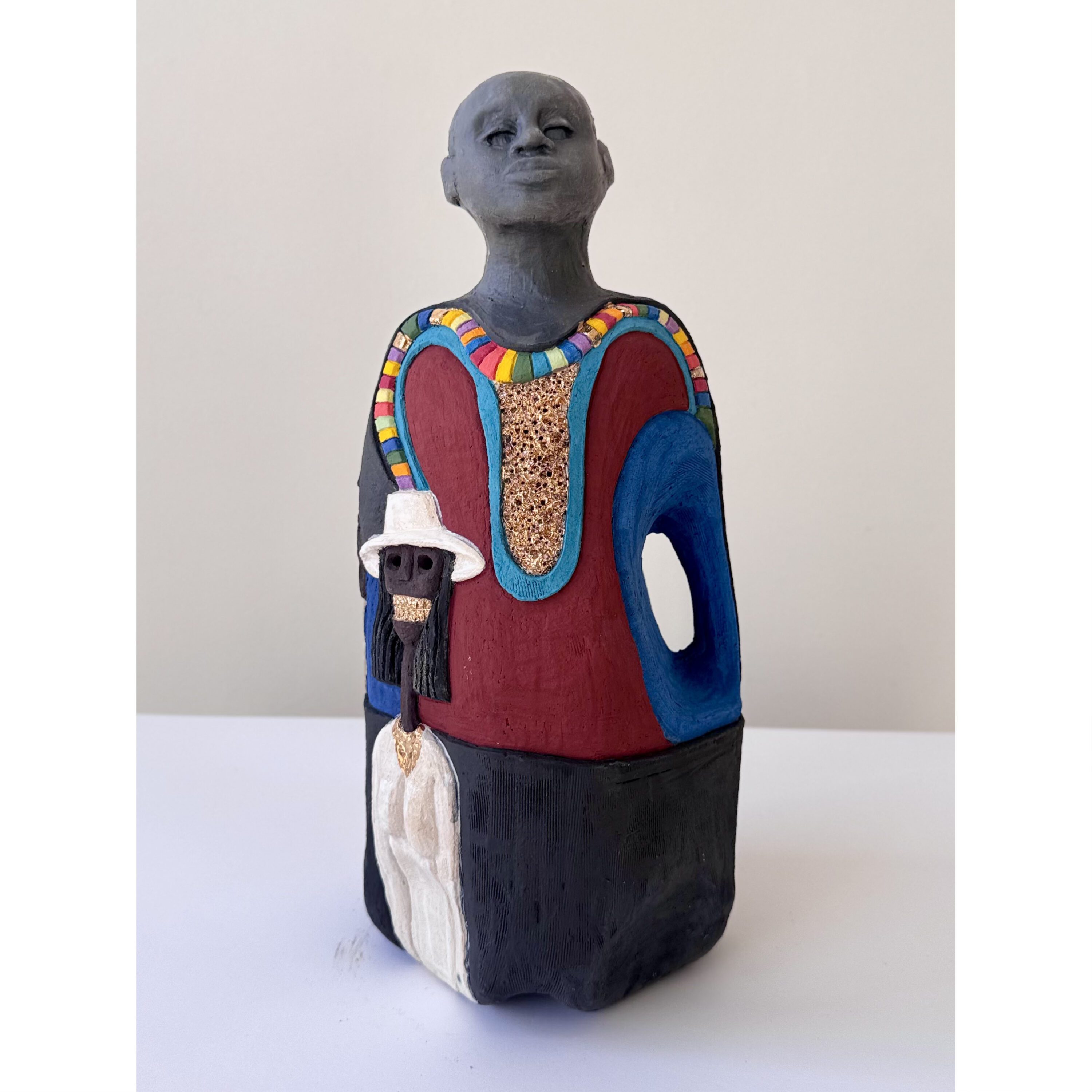
Lexus Giles
Church Ladies
13 x 9 x 9 inches
Ceramics
2025
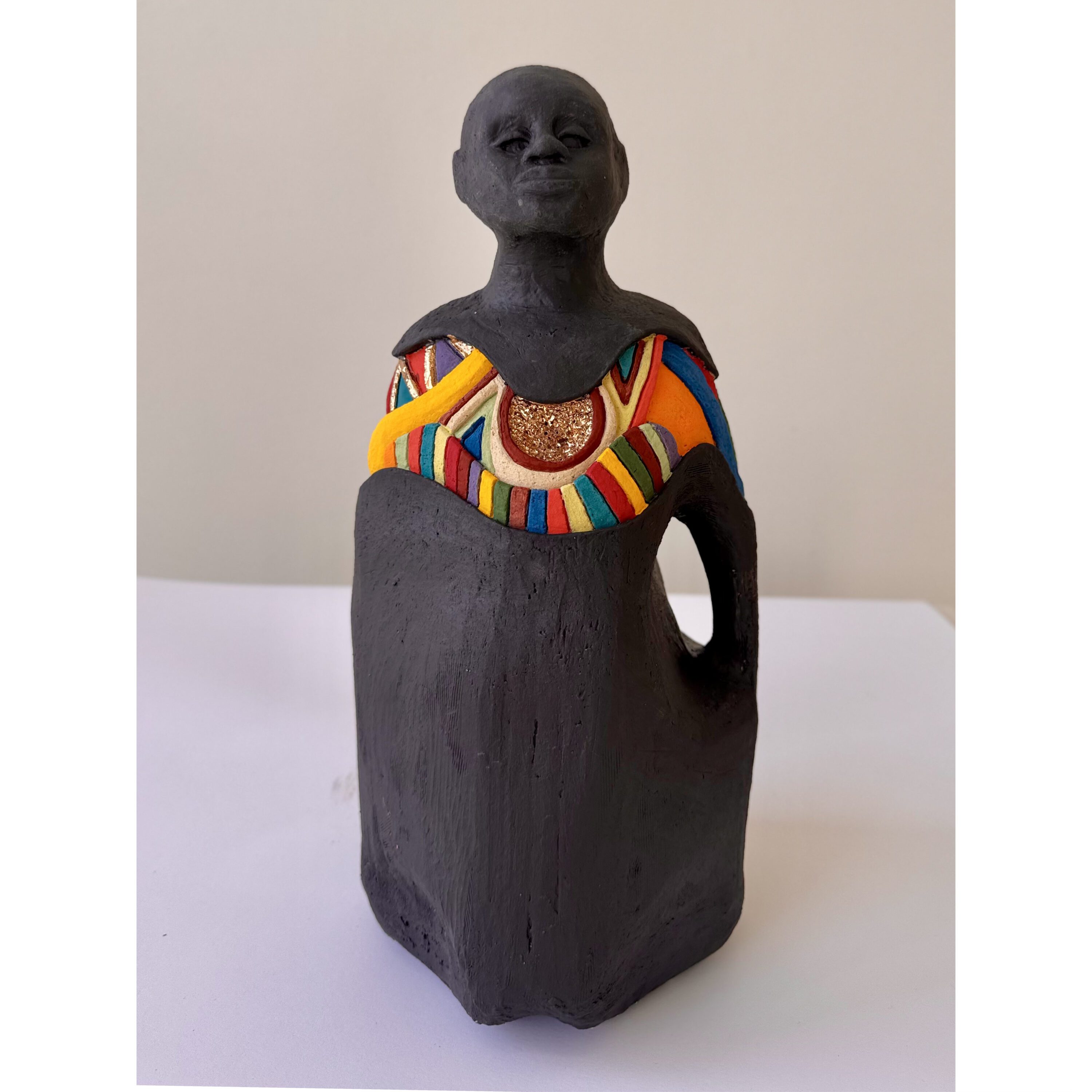
Lexus Giles
Deep Within
13 x 9 x 9 inches
Ceramics
2025
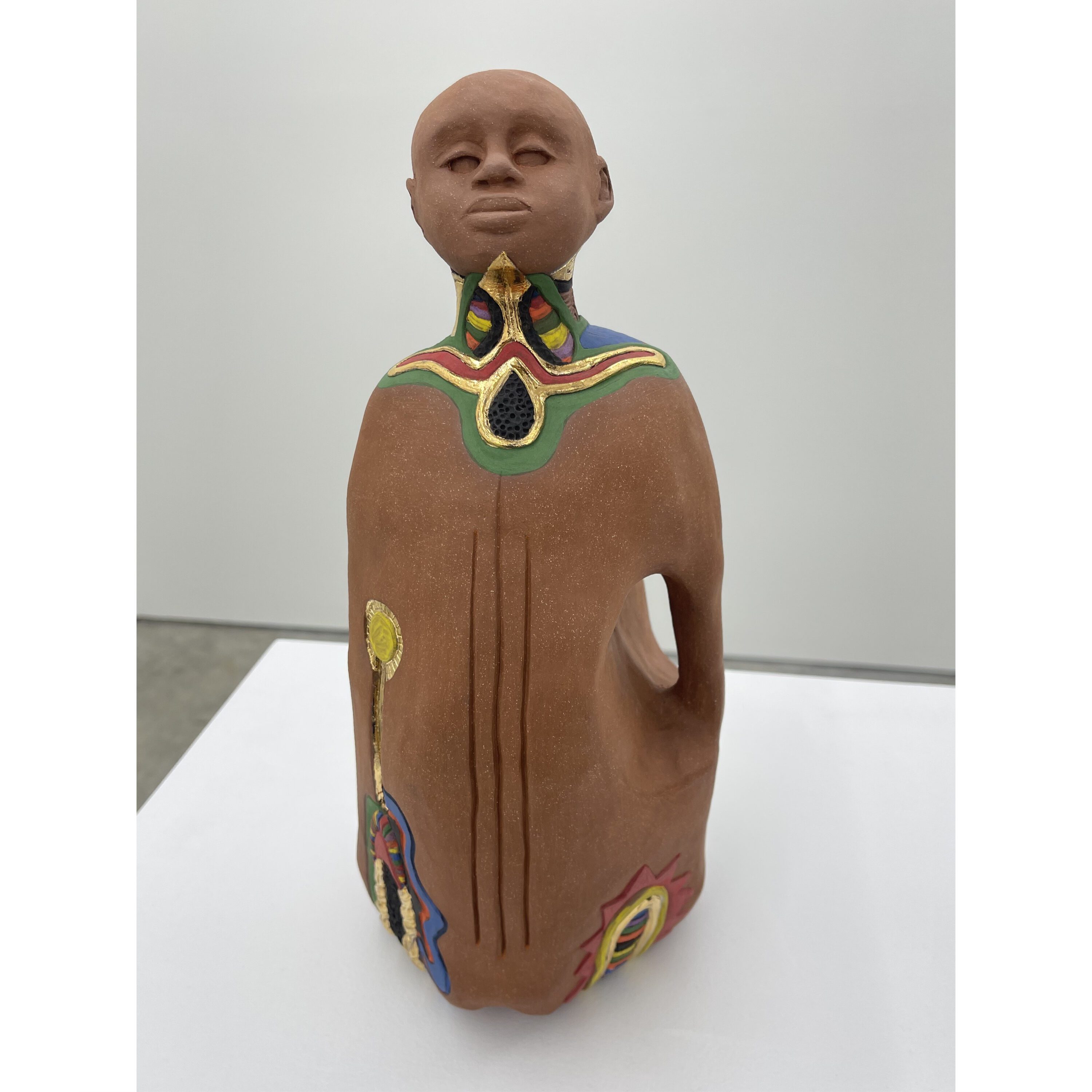
Lexus Giles
Genesis
13 x 9 x 9 inches
Ceramics
2025