Derriann Pharr: Guardians
By Brett Levine
There is a beautiful – perhaps heartbreaking – passage in the French philosopher Hèléne Cixous’s “The Laugh of the Medusa.” She says she’s talking of writing, but within a few short paragraphs her narrative shifts to something more visceral:
I, too, overflow; my desires have invented new desires, my body knows unheard-of songs. Time and again I, too, have felt so full of luminous torrents that I could burst – burst with forms much more beautiful than those which are put up in frames and sold for a stinking fortune. And I, too, said nothing, showed nothing; I didn’t open my mouth, I didn’t repaint my half of the world.
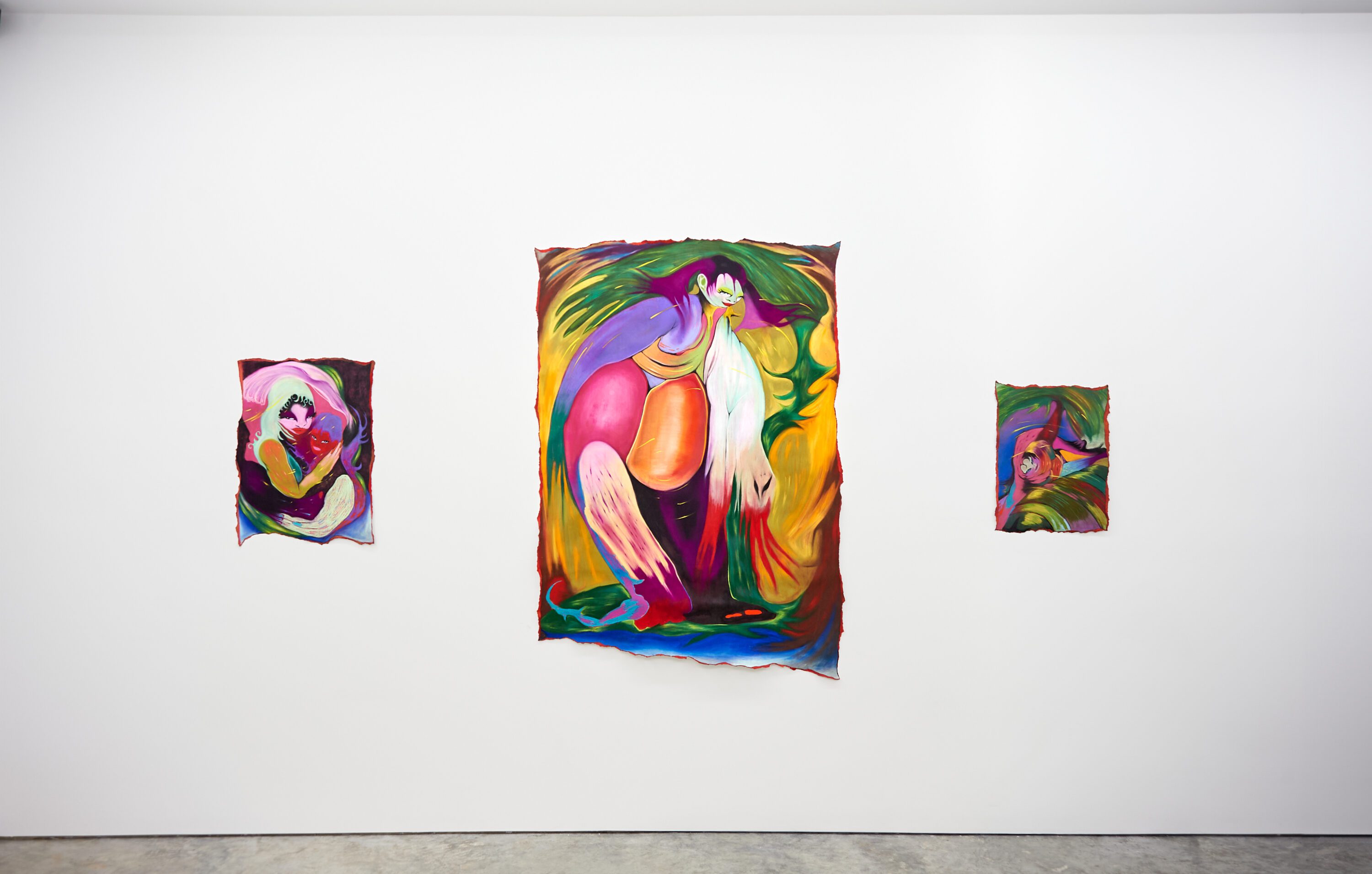
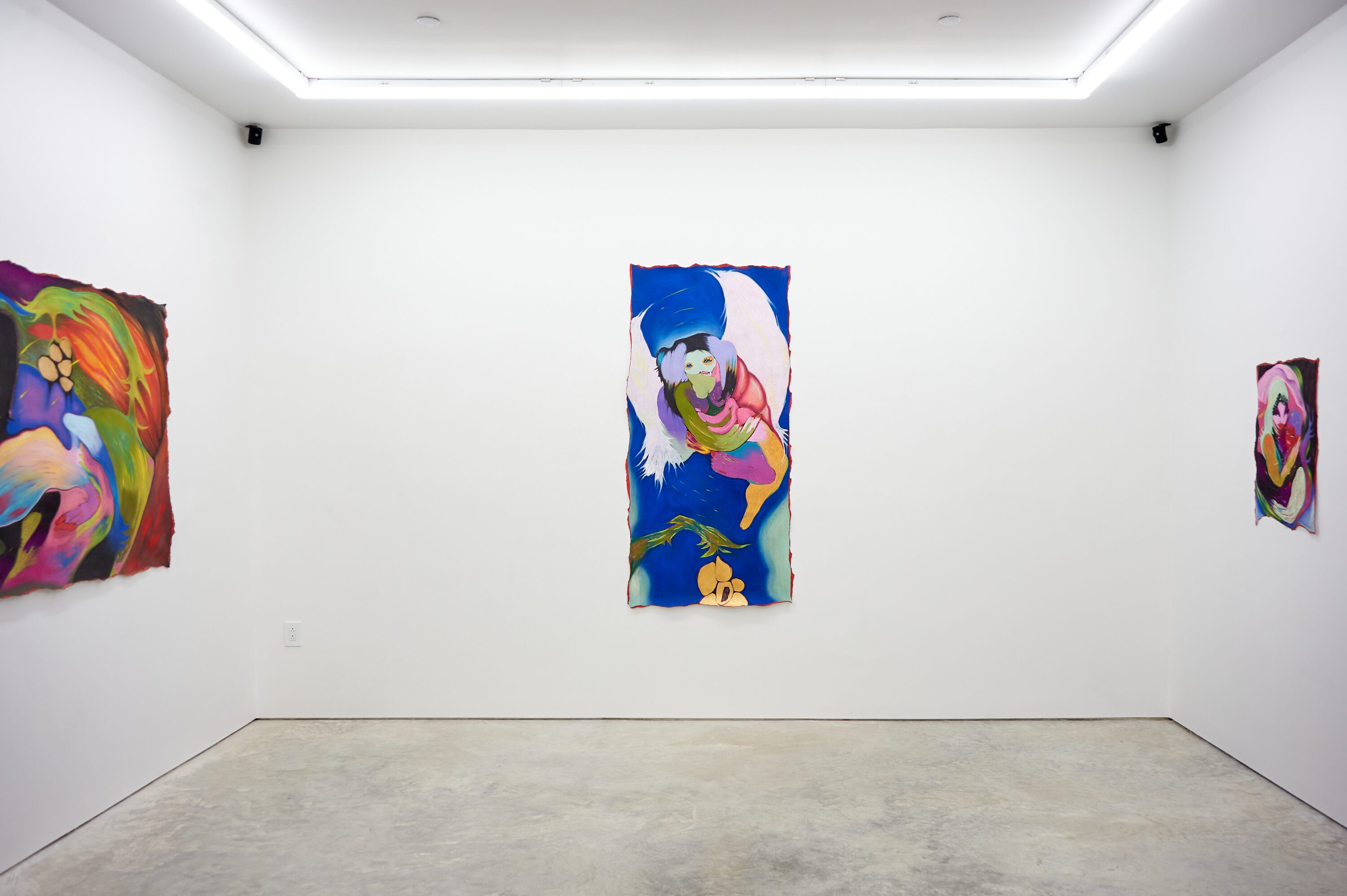
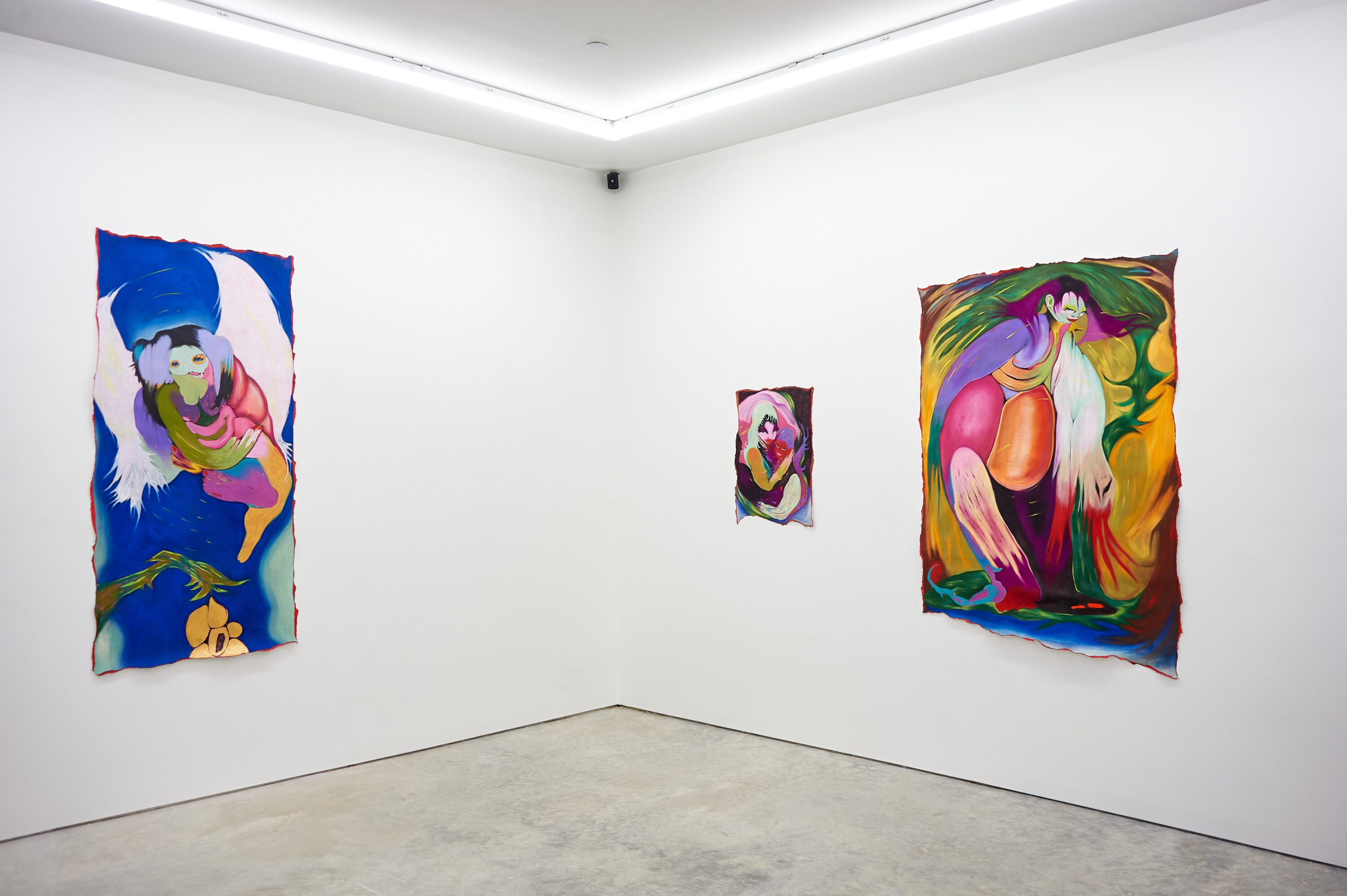
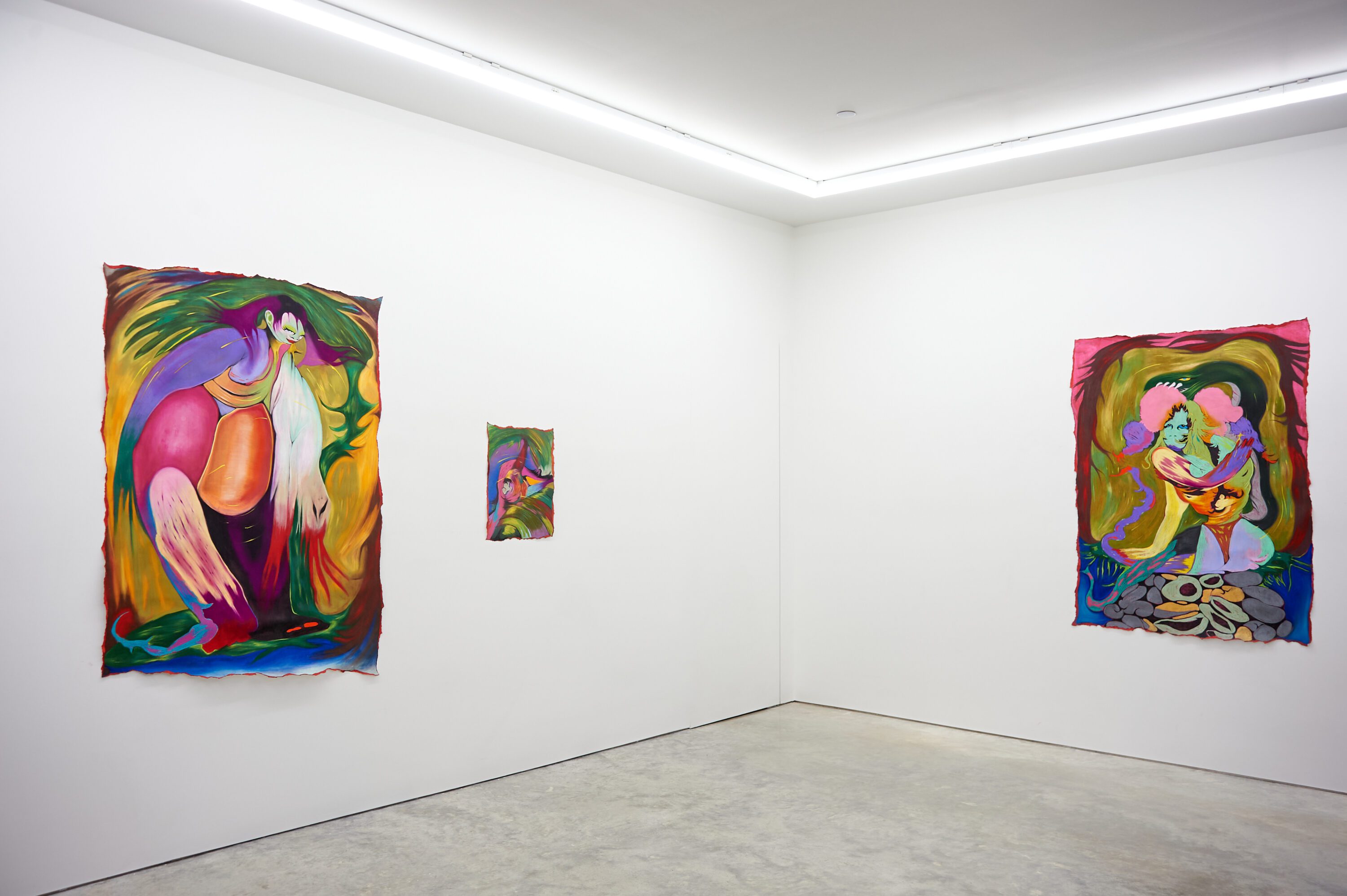
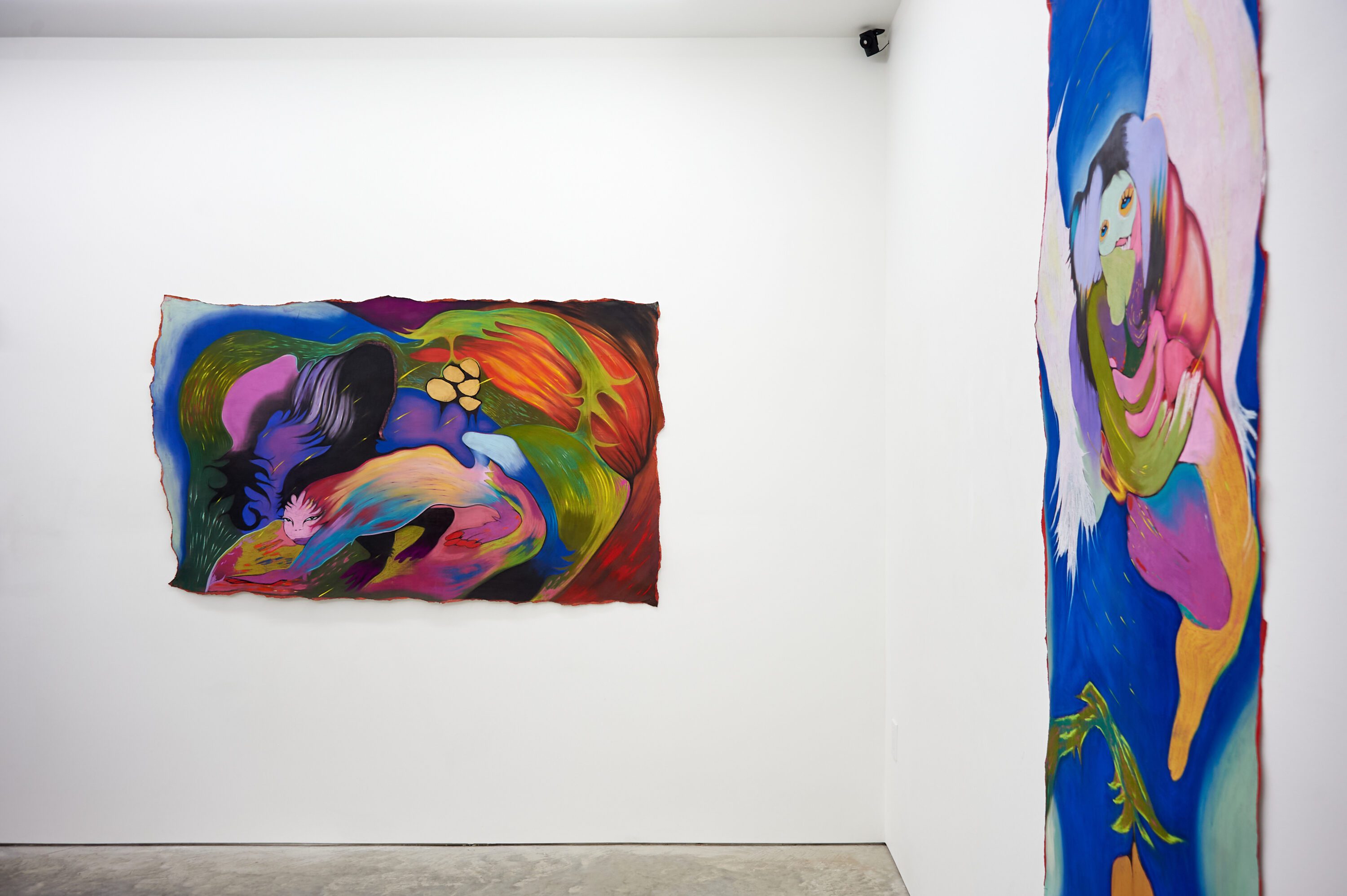
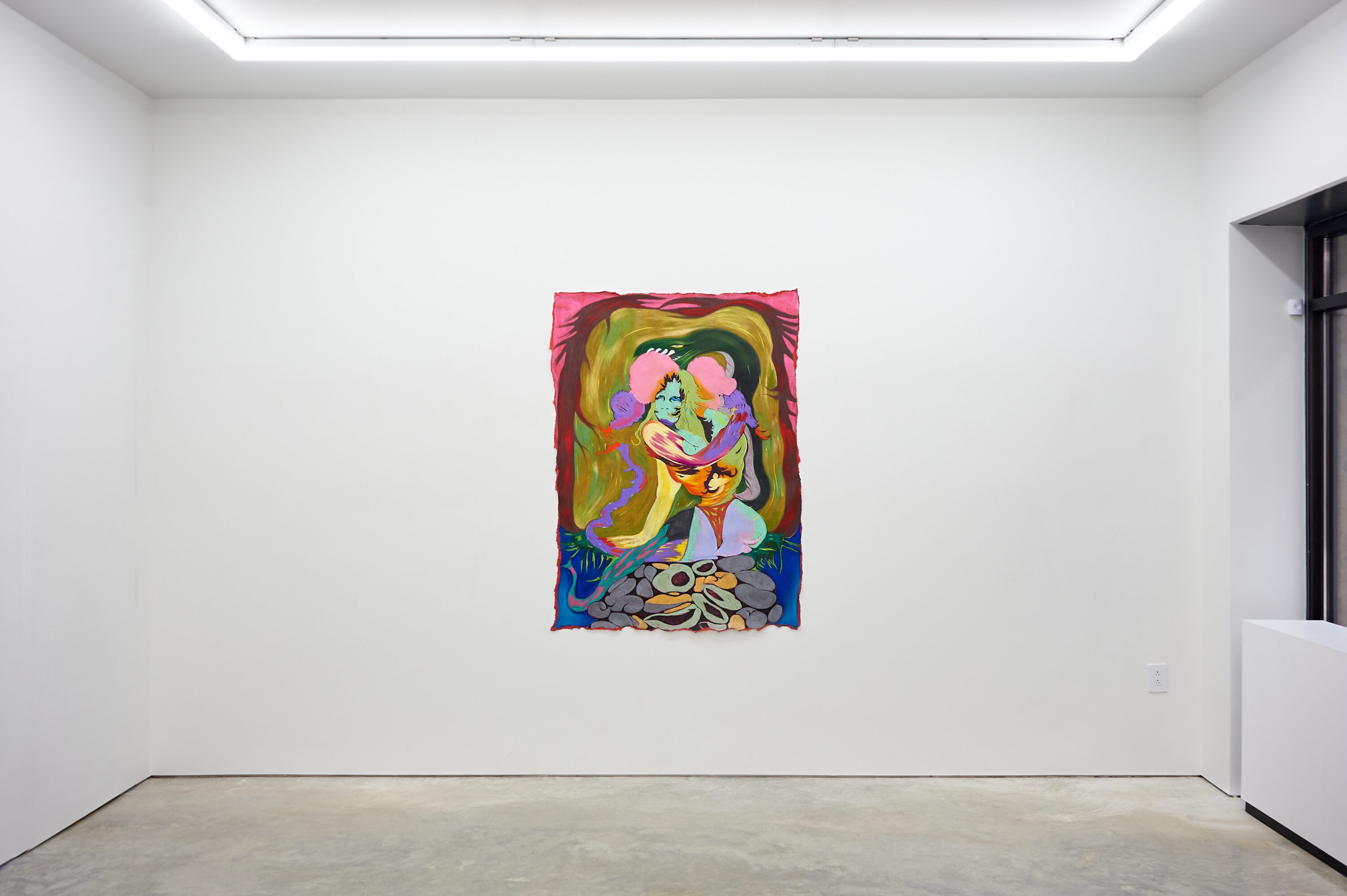
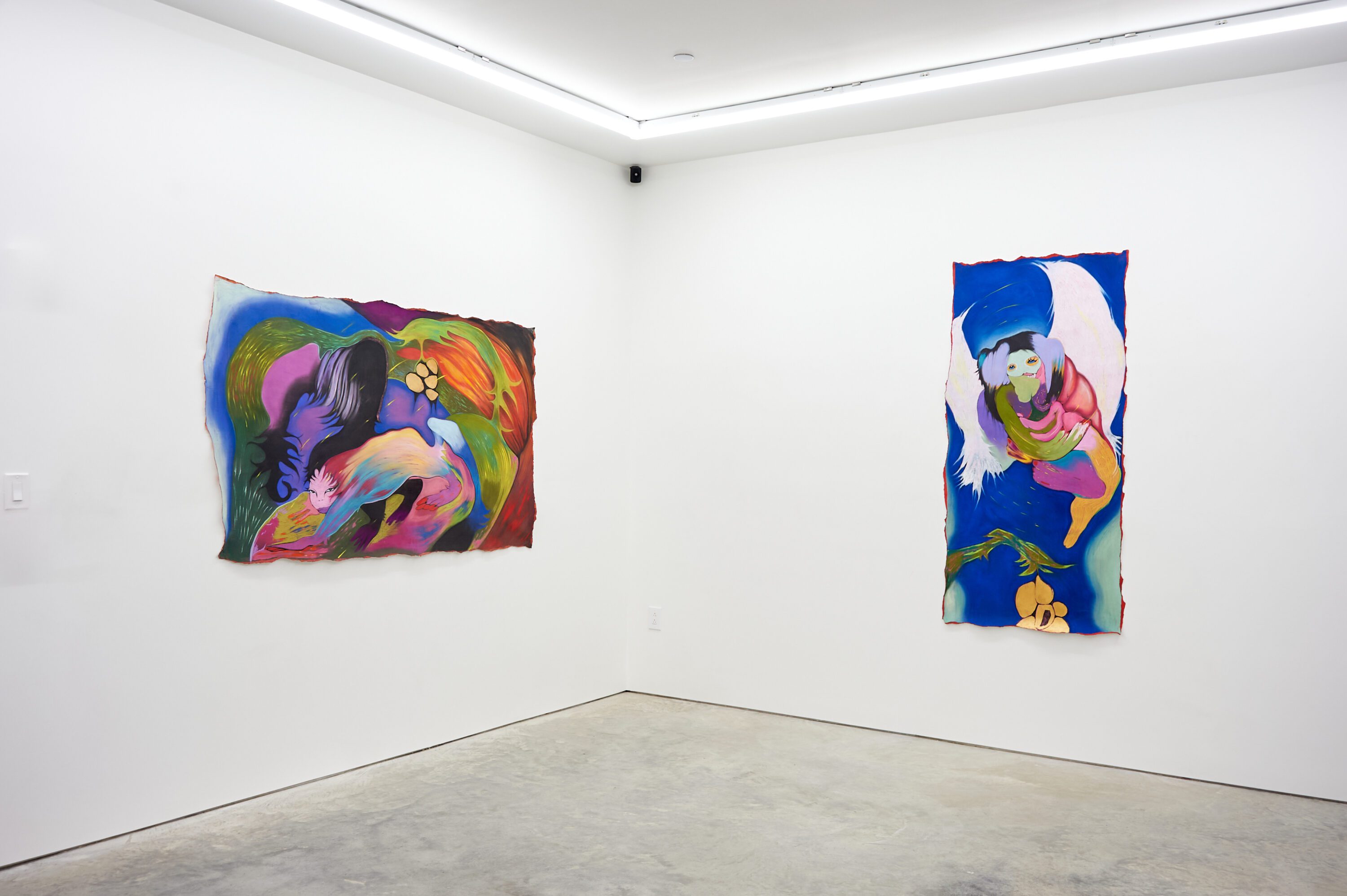
At first glance, the works in Derriann Pharr’s Guardians take you within and beyond what Cixous means. Against Cixous’s lament, Pharr’s are celebrations. Redefinitions. Challenges to the very notions of an Other or an Othered body, an assertion of female and feminine identities that exist both within and beyond Western cultural norms and expectations. Pharr’s is the story, the birth of a new body. The paintings? Her exploration of that body, one that redefines perspectives and expectations of self, invites us to reimagine the idea of what it means to be.
Pictorially, formally, Pharr’s palette shares much with Das Blaue Reiter. Kandinsky and Marc believed blue was a spiritual color, and here Pharr pushes that idea to its limits. A Song Will Set Me Free has shades of blue so engaging you’ll want to know their names. In Prowler: Guardian of the Cocoon we’re saturated by rich purples – amethyst, deep violet, and heliotrope. But it’s her subject– often herself – where her true transformations lie.
As she explains, her paintings consider diverse but interconnected subjects: intergenerational trauma; conflicting feelings around physicality; a sense of disconnection from what others perceive as a “dominant” culture; and the questions of self, identity, and change on the path toward transformation as a woman.
Each of these subjects appears, subtly yet significantly, across her surfaces. She speaks of her works as if she’s reassembling a skeleton – her “bones,” as she calls them – marks on her surfaces to suggest eyes, limbs, orifices, nature, and animal- human hybrids. Think of this as Pharr’s unique redefinition of intersectionality. Hers isn’t just an exploration of cultural intersections from the real, but rather one that questions what we might see were we to at least allow the possibility of forms of being beyond humans. There’s an angelic form, with wings and eyes – but what also look like intestines. Sweet Venom of Mine is clearly feminine, but there’s some indeterminate, suggestive form protruding from its navel before finding a triangle of fabric covering some potential assertion of identity below. And while Pharr shares her pronouns as she/her, these works demand that we consider the potential that gender isn’t fixed. We’d need only look to Samoa, and fa’afafine, to see those same signifiers of femininity and womanhood that Pharr arrays on her surfaces.
Her works are also about passion, that fiery assertion of self and the power that attaches to. It’s as if Pharr’s subjects demand bodily autonomy via what Audrey Hepburn would describe as a shade of red for every woman. See her figures, smiling, smirking in The Skin I’m In (I’ll Love You Regardless), suggesting, deflecting, and you’d be hard-pressed to say they’re not the pictorial embodiments of Hepburn’s wry remark.
One can’t overlook the powers of illustration and myth in the construction of allegory, and Pharr’s works do an exceptional job of inviting us to look more deeply at complex subjects. In a world long known for fetishizing the “other” – think the portrait of Sharbat Gula on the cover of National Geographic – Pharr flips the dialogue, making her imagery the center, and its misperceptions and stereotypes her periphery. Her magazine-cover eyes are those found in My Destiny (Indebted to You), two pairs gazing out at those looking within.
There’s a passage in Luce Irigaray’s “This Sex Which is Not One” which asks, “How can I be distinguished from her? Only if I keep on pushing through to the other side, if I’m always beyond, because on this side of the screen of their projections, on this plane of their representations, I can’t live. I’m stuck, paralyzed by all those images, words, fantasies. Frozen. Transfixed.” Pharr confronts that screen, those projections, those words, fantasies, representations, and demands instead that narrow becomes broad, that the exclusive becomes inclusive, that the few becomes the many. Hers is a journey from self to others, from exploration to assertion, from the fear of being overlooked to the power of demanding to be seen.

Derriann Pharr
A Song Will Set Me Free
71 x 33 inches
Mixed media on paper
2024
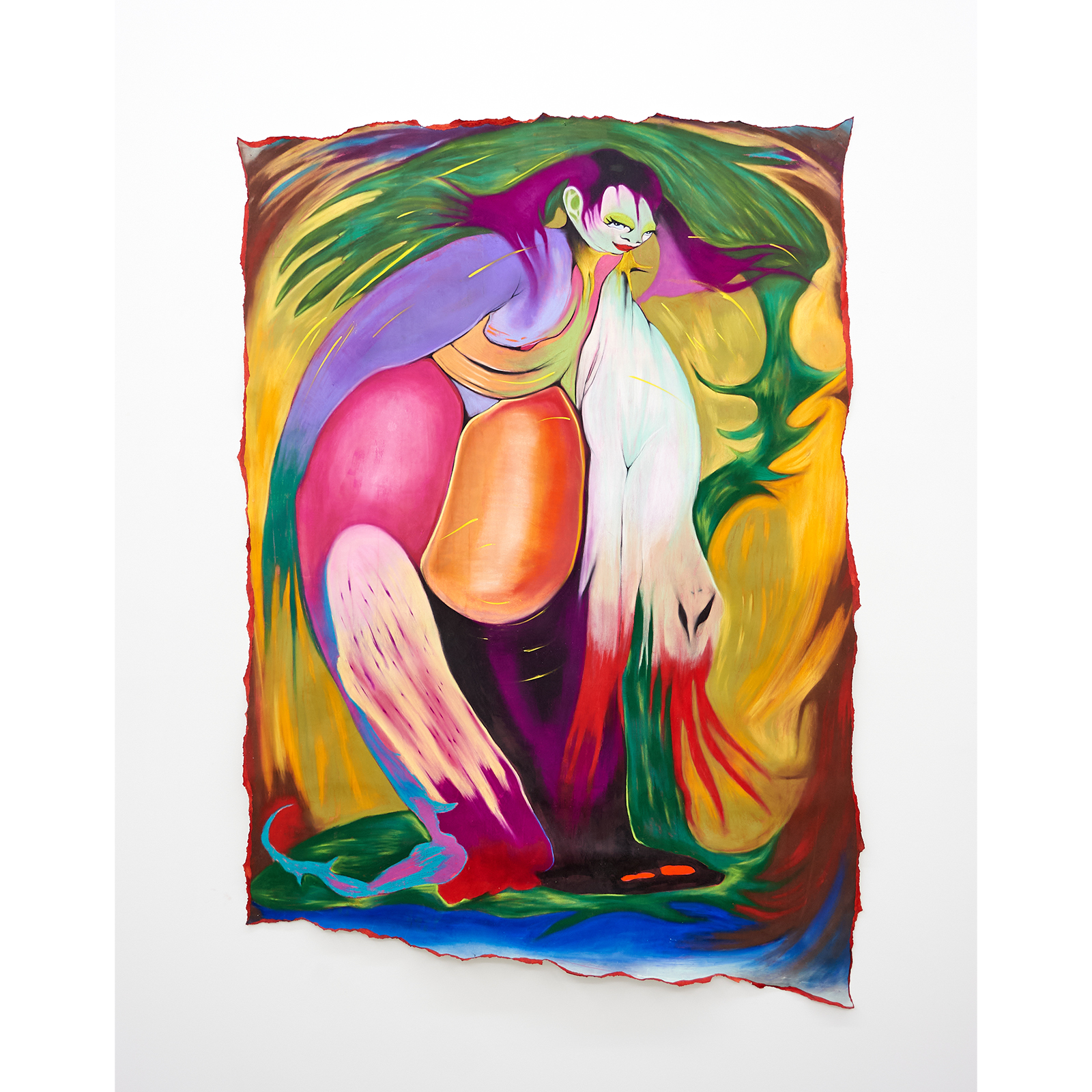
Derriann Pharr
The Skin I’m In (I’ll Love You Regardless)
66.5 x 46 inches
Mixed media on paper
2024

Derriann Pharr
Sweet Venom of Mine
62 x 45 inches
Mixed media on paper
2024

Derriann Pharr
My Destiny (Indebted to You)
27.5 x 20 inches
Mixed media on paper
2024

Derriann Pharr
Prowler: Guardian of the Cocoon
79 x 46 inches
Mixed media on paper
2024

Derriann Pharr
Spring in Mountainheim
23 x 17 inches
Mixed media on paper
2024